
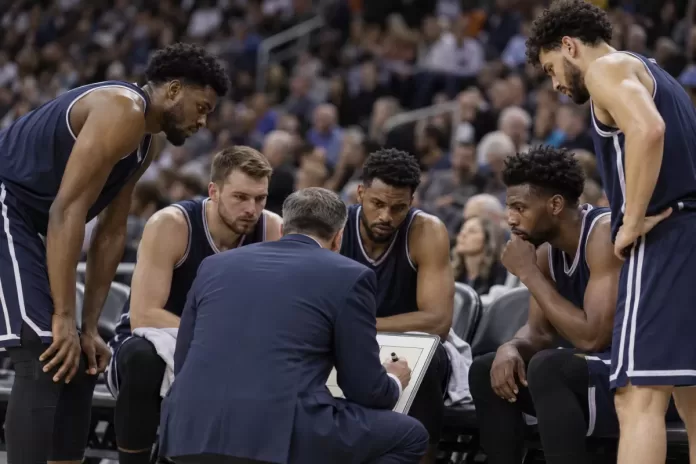
There are 3.2 seconds left, a team has just secured possession near its own basket and the coach immediately calls timeout. After the huddle, the ball appears much closer to the opposite hoop. Nobody dribbled it there, and the officials have not awarded extra territory for good behaviour.
The timeout has opened a specific option under NBA rules. In qualifying late-game situations, the offence can choose a frontcourt throw-in. That changes the next possession substantially, but the opportunity depends on when the timeout arrives and what happened before it.
A Pause Preserves a Particular Situation
A timeout interrupts a possession at a defined moment. The officials need to know which team controls the ball, where play stopped and what the offence had already done. Two seemingly similar stoppages can therefore lead to different restart locations.
The distinction between pausing an activity and changing its status also matters when an account has been unused for a long period.
For returning players who prefer fast withdrawal casino australia platforms, restoring access to an existing account typically involves using the original login credentials and checking the operator’s current inactivity and account reactivation policies. A dormant account may require support-assisted reactivation, while forgotten credentials call for a password reset. The operator may request identity confirmation before restoring access. Any inactivity period or administrative charge must be established from the applicable terms, since account recovery and dormancy policies differ between operators.
Back on court, officials likewise work with the situation that actually exists. A coach’s intention to advance the ball cannot replace the possession and timing conditions required by the rule.
3 Possessions Explain the Difference
Consider three hypothetical situations, each occurring with less than two minutes remaining in the fourth quarter. In each case, the team has a timeout available and the ball is in its backcourt.
- A rebound is secured and timeout follows immediately. Before any dribble or pass, the team can preserve the option to advance the ensuing throw-in.
- A steal is completed and timeout follows immediately. Gaining control matters; a loose ball still being contested does not give the team possession for this purpose.
- A rebound is followed by a dribble before timeout. The first timeout normally leaves the restart on the sideline where play stopped. Advancing now requires the additional timeout described in the rule.
The NBA’s Rule 5 on scoring and timing sets out these conditions, including the second-timeout provision. Treating every late timeout as an automatic advance misses an important part of the sequence.
A qualifying backcourt out-of-bounds situation can also provide the option. However, the rule excludes a suspension after the team had already advanced the ball. The details before the whistle remain relevant even though play has stopped.
Two Minutes Defines the Window
This particular advancement option applies during the final two minutes of the fourth quarter and the final two minutes of overtime. It does not become available simply because any quarter is nearly finished. The NBA considers the two-minute portion to have begun when the clock shows 2:00.
For an eligible restart, the offence may select the frontcourt sideline location at the 28-foot hash mark or retain the designated out-of-bounds spot. Advancing is a choice, so the coach can consider the passing angles and defensive setup.
Using a second timeout has a practical cost. It consumes another available stoppage that might otherwise help organise a later possession or resolve an inbounding problem. Calling it is therefore a tactical decision rather than a free correction to the earlier dribble.
The team also needs an available timeout in the first place. A request beyond the allowance carries a penalty, making the remaining timeout count part of the late-game picture.
The Restart Changes the Passing Problem
With 3.2 seconds remaining, a backcourt restart may require a long pass, rapid movement or a difficult shot before the horn. Moving the throw-in to the frontcourt can place potential receivers closer to useful shooting positions.
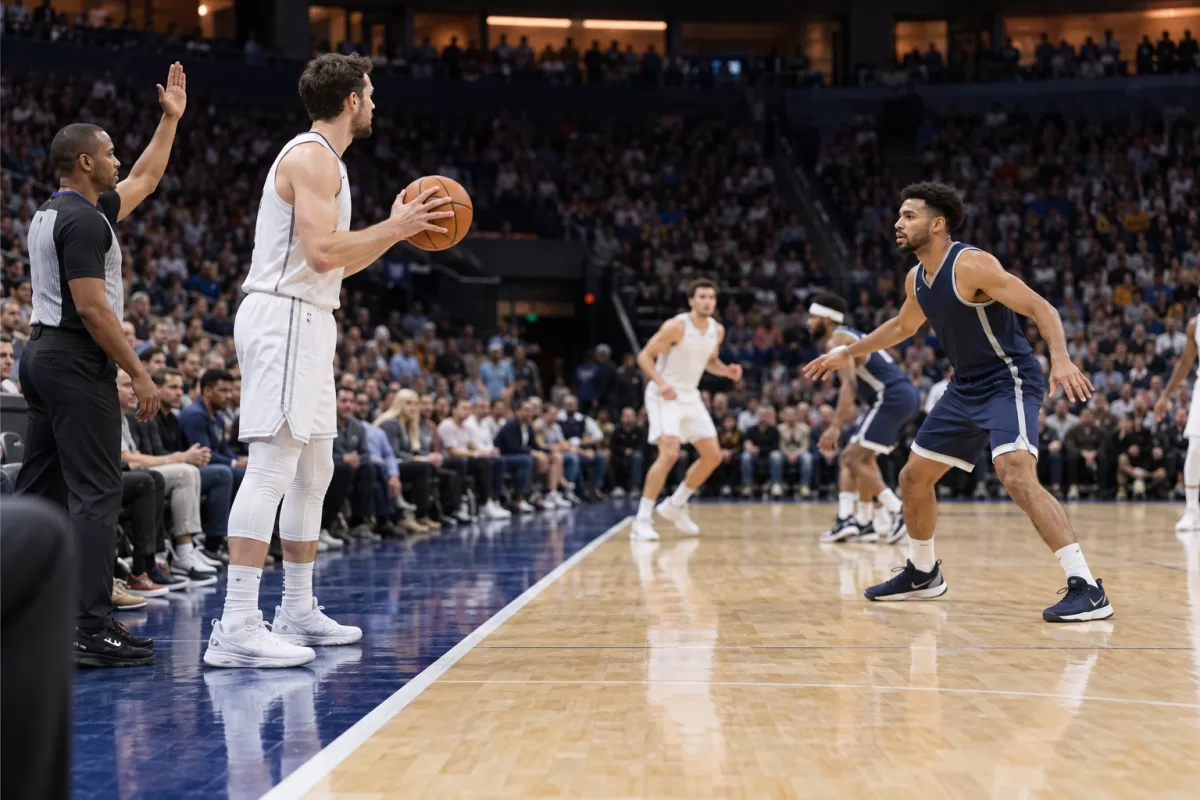
That benefit creates choices for the defence. It can deny the preferred shooter, switch a screen, protect the rim or pressure the inbounder. The timeout gives both benches time to prepare, so a shorter distance does not guarantee an easier completion.
The offence still needs:
- a clear initial receiving option;
- a response when the defence denies that option;
- spacing that keeps passing lanes separate;
- a shot suited to the time remaining.
The inbounder’s judgement connects those elements. A beautifully drawn first action offers little help if its receiver is covered and nobody recognises the alternative.
The Clock Waits for a Legal Touch
The pause does not add seconds to the possession. Under the advancement provision, the game and shot clocks retain the time showing when timeout was called. The available decision window remains finite.
The NBA’s rules covering the officials’ timing duties explain that, following a stopped-clock throw-in, the clocks start when the ball is legally touched on court. Time spent positioning players before the ball becomes live is different from time available after the pass reaches play.
The first touch can belong to a defender. A deflection may therefore use time even when the intended receiver has not yet secured control of the pass.
An eligible frontcourt throw-in also allows a pass into the backcourt. If that option is used, the team receives a fresh eight-second count. With only a few seconds on the game clock, however, the period can end well before that allowance becomes relevant.
That is why the immediate timeout after a rebound can matter so much. It preserves a restart option before the first dribble changes the sequence, leaving the coach a different passing problem to solve.